
There is a question I have started asking every senior leader I work with. Not in a provocative way, though it tends to land that way. In a diagnostic way. Because the answer tells me almost everything I need to know about how they lead, and whether the organisation they run will still be performing in five years.
The question is this: if you lost your title tomorrow, would anyone still follow you?
Most people pause. Some laugh. A few look genuinely unsettled. And that unsettlement, I have come to believe, is the most important signal in leadership development today.
Because what the question surfaces is the gap, often enormous, rarely acknowledged, between authority and influence. Between the power that comes with a position and the power that lives in a person. Between the leader who is followed because they hold the chair, and the leader who is followed because people genuinely want to go where they are going.
At Les Roches, where we prepare future leaders of the experience economy, this distinction between authority and influence is no longer theoretical – it shapes how we teach leadership. This gap is not new. But it has never mattered more than it does right now. And in the experience economy where the product is a feeling, and feelings are created by people, and people follow leaders, closing it is not a philosophical nicety. It is a strategic imperative.
The authority trap
For most of the 20th century, leadership in hospitality, luxury and service industries was built on a relatively simple model: hierarchy, standards, compliance. The general manager set the tone. The department heads enforced it. The staff delivered it. Accountability flowed downward. Authority flowed from the title.
This model worked for a world where the experience economy did not yet exist. Where guests expected consistency, not connection. Where the measure of a great hotel was whether the towels were folded and the wake-up call arrived on time. Where staff were trained to a standard and measured against it.
That world is gone. And the leadership model built for it is producing precisely the failures that are costing the industry its most precious asset: the unrepeatable human moment.
The experience economy does not reward compliance. It rewards presence. It rewards the junior concierge who, without a script and without a supervisor watching, does something unexpected and deeply personal for a guest who will remember it for 20 years. It rewards the team that, in the middle of a crisis like a wedding delayed by weather or a VIP arrival gone wrong, improvises brilliantly rather than freezing for instructions.
You cannot generate that with authority. You can only generate it with influence.
What influence actually is
There is a lot of confused thinking about influence in leadership literature. It is often treated as a soft skill, something charming or charismatic leaders have, and serious operational leaders do not need.
This is exactly backwards.
Influence is not charm. It is not likeability, though those things help. Influence is the capacity to move people, to change how they think, what they prioritise, how they act, without needing the formal power to compel them. It is the difference between a leader people follow because they have to and a leader people follow because they want to.
In practice, influence is built on three things: clarity of conviction, consistency of behaviour, and genuine investment in the people around you. You need to stand for something that is actually worth following. You need to demonstrate that conviction under pressure, not just in speeches. And you need to care enough about your people, their growth, their capacity, that they experience your leadership as something done with them, not to them.
This is not complicated. It is, however, hard. Particularly for leaders who built their careers in organisations that rewarded authority over influence, compliance over conviction, and hierarchy over human investment.
The Yin Yang of leadership
The leaders I have seen do this most effectively across hospitality, sports, education and luxury, share a quality that I have come to think of as Yin Yang leadership. Not as a philosophical metaphor but as an operational description of what they actually do.
They hold opposites simultaneously, and they move between them fluidly.
They are rigorous and warm. They maintain standards and create space for improvisation. They are strategically certain and genuinely curious. They lead from the front when the moment demands it, and they disappear into the background when their people need to own the outcome. They know when to be the loudest voice in the room and they know, equally, when being the loudest voice is precisely the wrong move.
This is the core competency of leadership in the experience economy. Not one side of the equation. Both. At the same time. In real situations, under real pressure, in front of real people.
Most leadership development programmes teach one half. They build either the rigour or the warmth. Either the strategic authority or the human presence. They do not teach the tension between them, or the intelligence required to navigate it. They produce leaders who are very good at one mode and brittle in the other.
And then those leaders wonder why the experience they designed is not the experience their guests receive.
From hero to host
There is a deeper shift happening here that the industry has not yet fully reckoned with.
The leadership archetype that dominated the 20th century was the hero: the visionary, the decisive authority, the person at the top of the hierarchy whose individual brilliance carried the organisation. This model produced some extraordinary results, and it also produced cult-of-personality cultures, innovation deserts, and organisations so dependent on one person’s judgement that they could not function when that person was not in the room.
The leadership archetype that the experience economy actually needs is the host.
The host does not dominate. The host creates conditions. The host designs environments where other people can do their best work, contribute their full selves, and deliver experiences that no script could have anticipated. The host holds the vision clearly while remaining genuinely open to how others will bring it to life. The host’s success is measured not by their own brilliance but by the brilliance they enable in others.
This approach is also deeply rooted in a Swiss tradition of excellence, where precision and human quality of service go hand in hand.
This is not a lesser form of leadership. It is a harder one. It requires ego management at a level most leadership training never addresses. It requires a willingness to be powerful without needing to be seen as powerful and to lead without being the loudest in the room.
But it is the form of leadership that will define the next decade of the experience economy.
The organisations that make this transition, from hero culture to host culture, will build the kind of human experiences that generate the loyalty, advocacy and premium pricing that no marketing budget can manufacture. The ones that do not will keep mistaking volume for authority and wondering why their guests keep leaving for somewhere that made them feel something.
The question, revisited
So: if you’d lost your title tomorrow, would anyone still follow you?
The leaders who answer yes confidently, and not because of their personal brand or their network, but because they have genuinely built something in the people around them are the ones already operating in the mode the experience economy requires.
The ones who are not sure are not failing. They are at exactly the right starting point. For the next generation of leaders we work with, this is not an abstract concept, but a capability they must develop from the very start of their careers.
Because the work of building influence, real influence not the performed kind, begins with precisely this kind of honest reckoning. It begins with knowing the difference between the power you were given and the power you have earned. And it continues, every day, in the small decisions that no one notices until they notice everything: how you handle the difficult conversation, how you respond to failure, how you treat the person at the bottom of the hierarchy when no one important is watching.
That is where leadership lives. Not in the title. Never in the title.
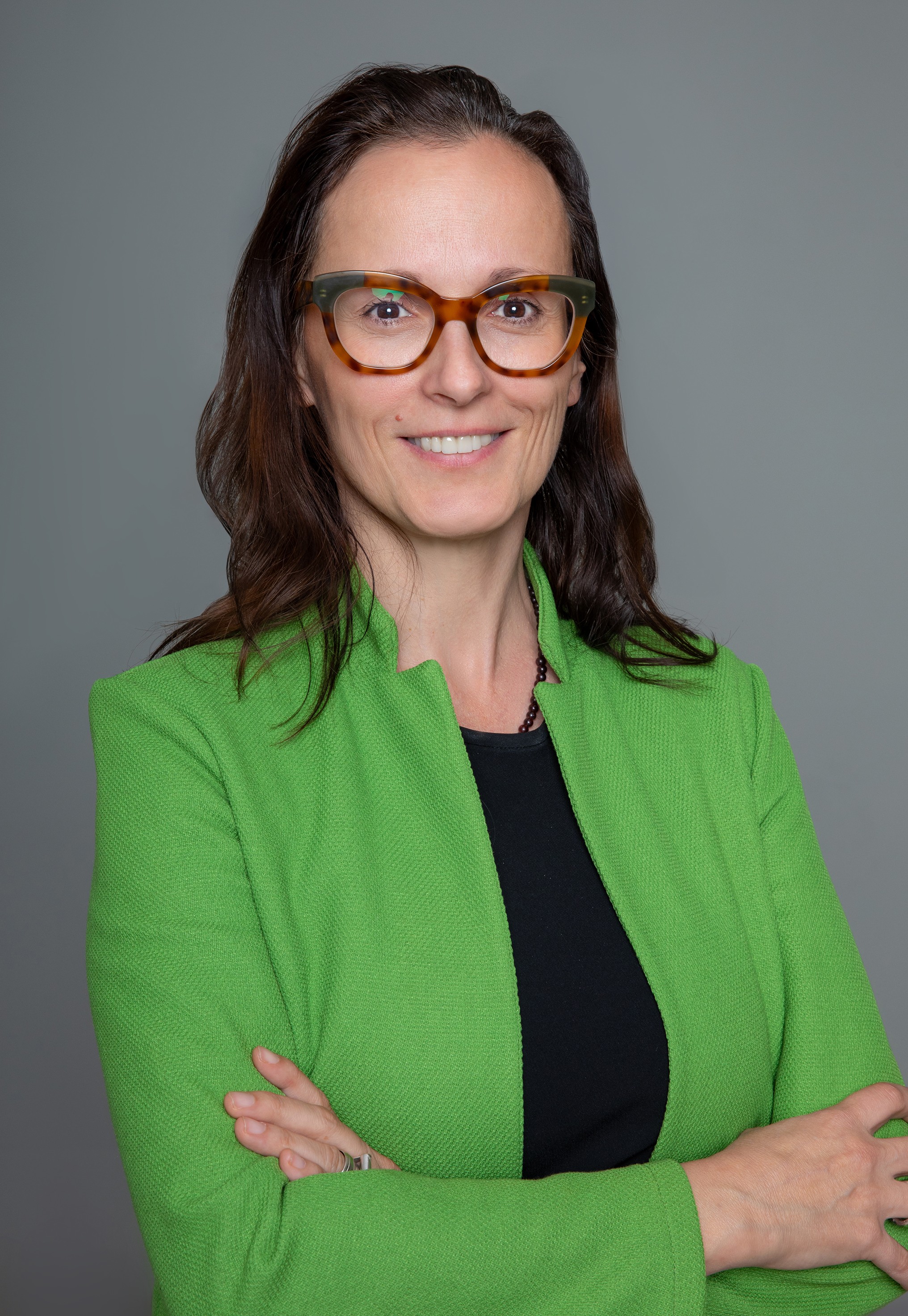
Dr Ivana Nobilo is Executive Academic Dean at Les Roches and an advisor to governments, corporations and international organisations on leadership development, experience economy strategy, and education transformation.
Leave a Reply